
Professional Deck Staining in Knoxville, TN
Deck staining requires more than just applying stain to wood. The success of any deck staining project depends on surface prep, product selection, application technique, and timing.
At Knoxville Deck Builders, operated by Anchored Construction and Restoration LLC, we focus on long-term protection rather than quick cosmetic fixes. Our approach combines proper wood preparation with quality materials designed for East Tennessee weather.
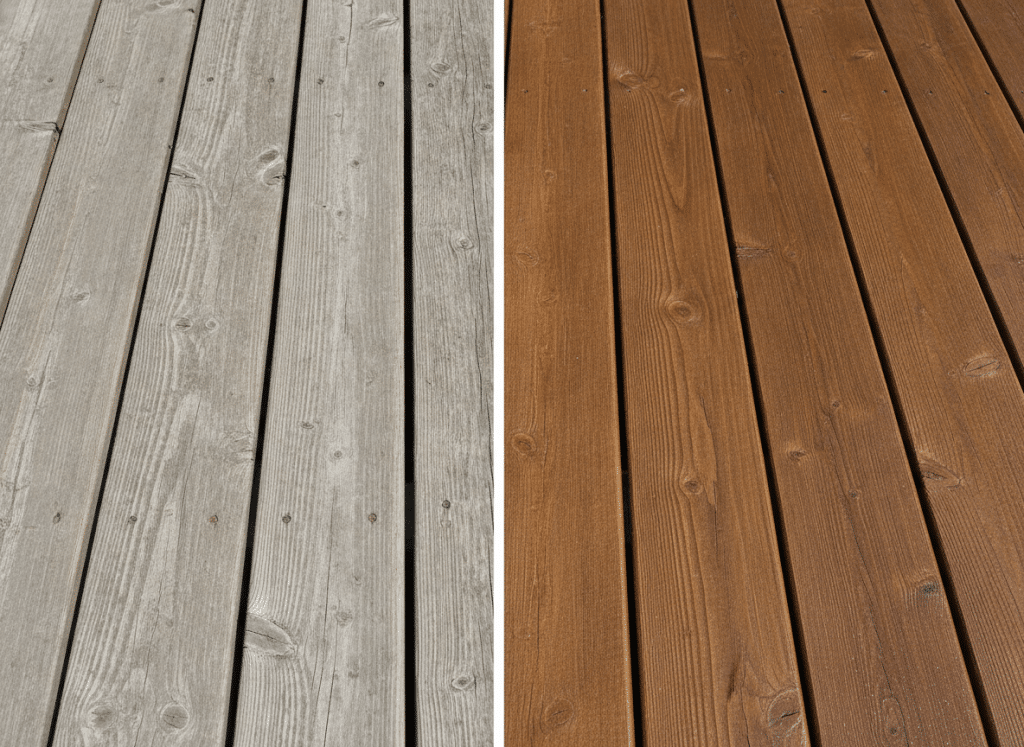
We provide free initial consultations where we evaluate your deck’s condition. This includes checking for rot, loose boards, structural issues, and surface damage. We help you choose the right stain color and product type for your goals.
Our in-house crews handle every step. We don’t subcontract core work. This means better quality control and accountability on your project.
Get Your Free Deck Evaluation
Not sure what your deck needs? We’ll assess its condition and recommend the best approach for protection and appearance. No pressure, just honest guidance from local experts.
Why Deck Staining Matters in East Tennessee
Our regional climate creates unique challenges for wood decks. Understanding these factors helps you protect your outdoor space effectively.
Humidity and Moisture Exposure
East Tennessee experiences high humidity throughout spring and summer. Moisture penetrates untreated wood and creates conditions for mold, mildew, and rot.
Deck staining sealing creates a barrier against water intrusion. Quality sealers prevent moisture from entering wood fibers while allowing vapor to escape.
UV Damage and Sun Exposure
Intense summer sun breaks down wood lignin. This causes graying and surface degradation. UV rays also weaken wood fibers over time.
Deck stain contains UV inhibitors that block harmful rays. This preserves wood color and structural integrity through our hot summers.
Temperature Fluctuations
Knoxville sees freezing winters and hot summers. These temperature swings cause wood to expand and contract repeatedly.
Unprotected wood develops cracks and splits from this movement. Proper stain application helps wood handle these changes without damage.
Rain and Standing Water
Heavy spring rains and summer thunderstorms test deck surfaces. Water pools in low spots and between boards.
Deck staining products with quality sealers shed water quickly. This prevents absorption that leads to warping, cupping, and decay.
Signs of Weather Damage
- Gray or faded wood color
- Rough, splintered surface texture
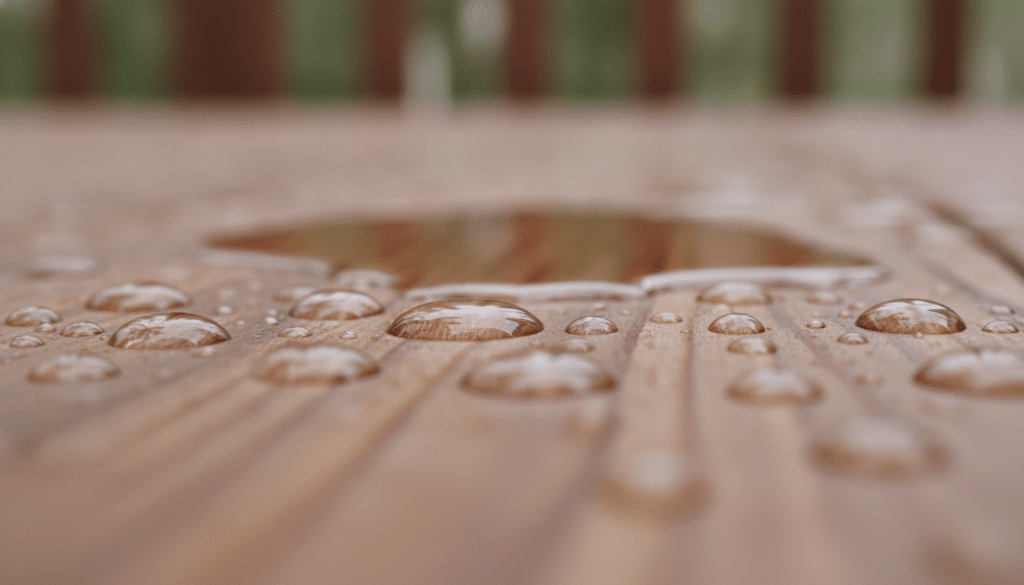
- Water absorption instead of beading
- Mold or mildew growth
- Cracking or splitting boards
- Soft spots or rot
Protection Benefits
- Extended deck lifespan
- Reduced repair costs
- Maintained home value
- Safe walking surface
- Enhanced appearance
- Easier cleaning and maintenance
Deck Staining vs Deck Painting
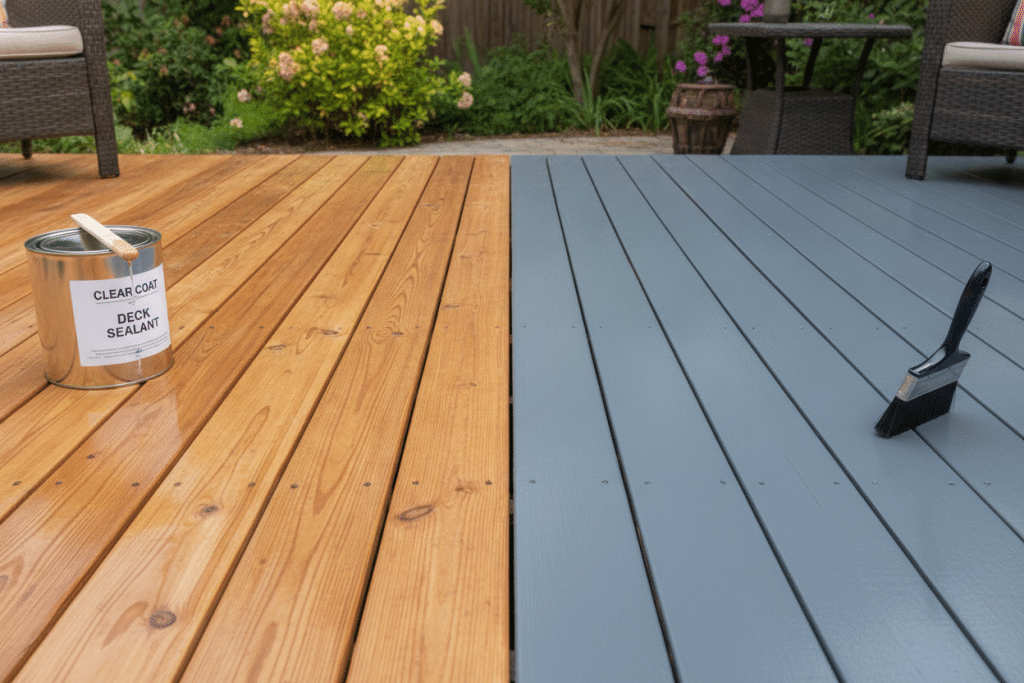
Homeowners often wonder whether to stain or paint their deck. Each option offers different benefits and drawbacks for wood protection.
How Deck Staining Works
Stain penetrates into wood fibers. It enhances natural grain while adding color and protection. Stain allows wood to breathe and move naturally.
Most deck stain products come in three types. Transparent stain shows maximum grain. Semi-transparent provides moderate coverage. Solid stain offers paint-like opacity while still penetrating wood.
How Deck Painting Works
Paint creates a surface film on top of wood. It completely hides grain and wood character. Paint provides a uniform, opaque finish.
Deck painting works best on newer wood or surfaces already painted. It requires more intensive prep to ensure adhesion.
Key Differences
| Factor | Deck Staining | Deck Painting |
| Appearance | Shows natural wood grain | Solid color coverage |
| Application | Penetrates wood fibers | Surface film coating |
| Maintenance | Recoat every 2-4 years | Scrape and repaint every 3-5 years |
| Wear Pattern | Fades gradually | Chips and peels |
| Prep Work | Clean and light sand | Extensive scraping if repainting |
| Wood Movement | Allows natural flex | Can crack with movement |
For most wood decks in Knoxville, staining makes more sense. It works better with our climate and preserves the natural character of wood.
Paint works well for pool deck painting on concrete surfaces. It also suits covered porch floors where foot traffic is lighter.
Unsure which option fits your deck best? We’ll help you evaluate your situation and recommend the right approach.
Wood Deck Staining for Older and Weathered Decks
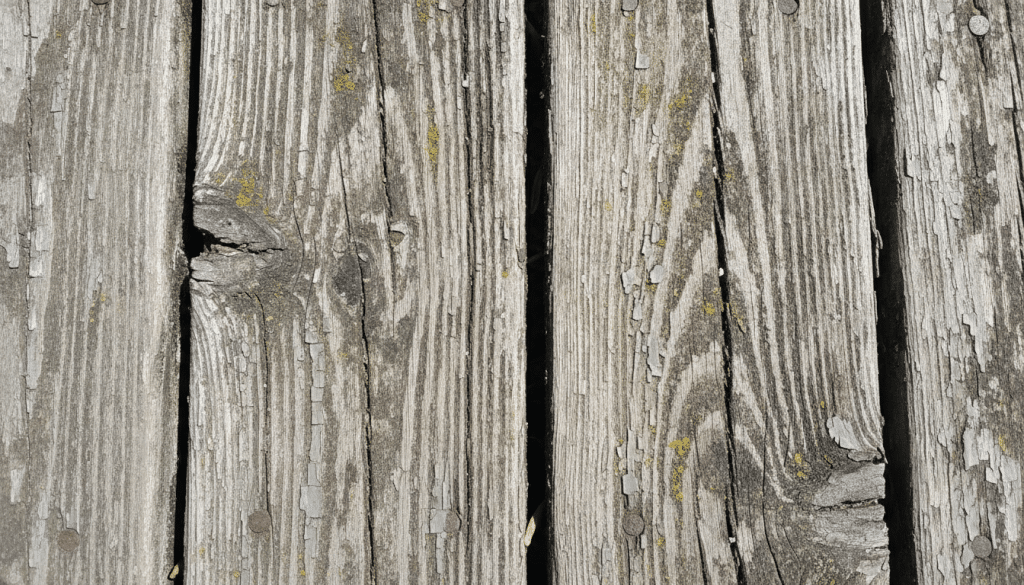
Older decks present special challenges. Years of sun, rain, and foot traffic leave wood dry, gray, and damaged.
Assessing Deck Condition
Before staining any deck, check its structural integrity. Walk the entire surface and note problem areas.
Look for loose boards, protruding nails, rot, and severe splitting. Press on railings to test stability. Check connections at posts and steps.
Some issues require repair before staining. Applying stain to damaged wood wastes time and money. The finish won’t last, and problems will worsen.
Surface Preparation Requirements
Old wood needs thorough cleaning to accept stain properly. Gray weathered fibers must be removed to reach fresh wood beneath.
This process typically involves deck cleaner application and pressure washing. The pressure washer removes dirt, mildew, old stain residue, and damaged surface fibers.
After cleaning, wood must dry completely. This usually takes 48 hours minimum. Moisture in wood prevents stain absorption and causes adhesion failure.
Dealing with Previous Finishes
Many older decks have peeling stain or failing sealer. These old coatings must come off before applying new products.
A deck stain remover strips existing finishes chemically. For heavy buildup, sanding may be necessary. This creates a clean surface for new stain.
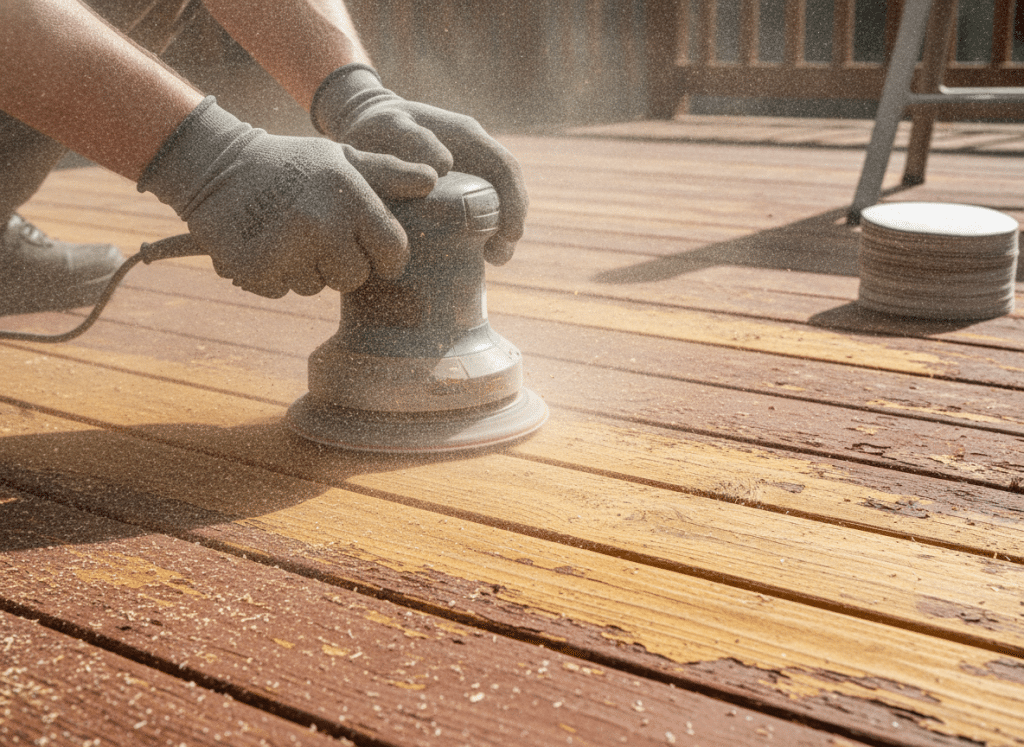
Pressure-treated wood that’s never been stained needs special attention. New pressure-treated lumber contains chemicals and moisture that prevent stain absorption. Wood should age at least six months before first staining.
When Replacement Makes More Sense
Sometimes wood deck staining isn’t the right solution. Severely rotted boards need replacement. Widespread structural issues require rebuilding.
We provide honest assessments of deck condition. If staining won’t deliver lasting results, we’ll tell you upfront and explain better options.
Deck Staining Sealing and Moisture Protection
Protection against water damage ranks as the top priority for any deck finish. Moisture causes most deck failures in our region.
Understanding Sealers and Stains
Some products combine stain and sealer in one. Others require separate application of stain followed by a clear sealer coat.
Quality deck staining sealing products contain water repellents. These create a hydrophobic surface that sheds rain and prevents absorption.
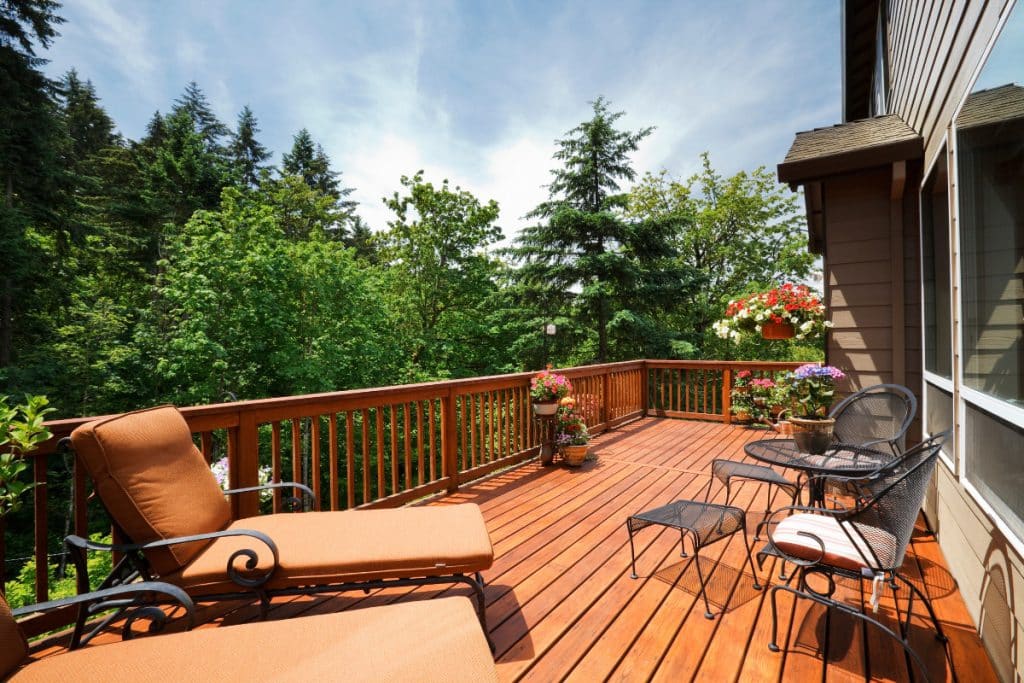
Film-forming sealers sit on the wood surface. Penetrating sealers soak into wood fibers. Penetrating types work better for decks because they allow vapor movement while blocking liquid water.
How Long Protection Lasts
No deck finish lasts forever. Our climate tests every coating system.
Most quality stain and sealer combinations protect for two to four years. Horizontal surfaces wear faster than vertical railings. High-traffic areas near doors need attention sooner.
You’ll know protection is failing when water no longer beads on the surface. If water soaks in quickly, the wood needs refinishing soon.
Maintenance Between Full Refinishing
Regular cleaning extends the life of your deck staining project. Sweep debris weekly. Wash the surface annually with deck cleaner.
Some homeowners apply fresh sealer between full refinishing. This adds a year or two of protection. The wood must be clean and dry for sealer to bond.
Quick Test: Splash water on your deck. If it beads up and sits on the surface, your sealer is working. If water soaks in immediately, protection has failed and moisture is entering the wood.
Choosing the Right Deck Staining Color
Deck staining color affects both appearance and performance. The right choice complements your home while meeting practical needs.
For more examples to discuss during your project planning, explore our guide to deck staining color options.
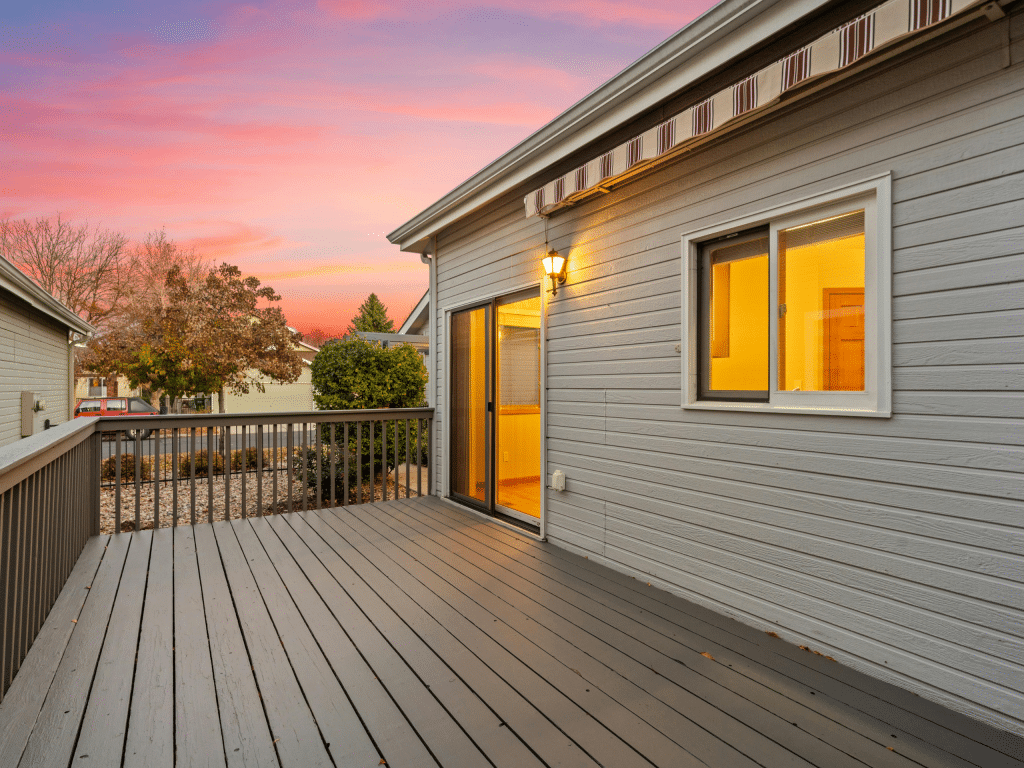
Color Categories and Options
Transparent stains showcase natural wood grain with minimal color change. They work well for new wood with attractive grain patterns.
Semi-transparent stains add moderate color while letting grain show through. They hide minor wood imperfections better than clear products.
Solid color stains provide paint-like coverage. They hide old weathered wood and surface defects completely while still penetrating like stain rather than forming a surface film.
Popular Deck Staining Color Choices
Natural tones remain most popular in Knoxville. Cedar, redwood, and honey tones enhance wood character without looking artificial.
Gray tones have grown trendy. They create a modern weathered look intentionally rather than letting sun damage create uneven graying.
Dark browns and espresso colors make a bold statement. They hide dirt well but show dust and pollen more readily. Dark colors also absorb more heat in summer.
Matching Your Home Exterior
Consider your siding, trim, and roof color when selecting deck stain. The deck should complement rather than clash with existing colors.
Brick homes pair well with warm brown and reddish tones. Light-colored vinyl siding works with both warm and cool deck colors. Stone or gray exteriors match nicely with gray-toned or natural wood stains.
Factors to Consider
- Existing home color palette
- Wood type and grain visibility
- Sun exposure and heat absorption
- Maintenance preferences
- Current deck condition
- Furniture and decor colors
- Neighborhood aesthetic
- Personal style preferences
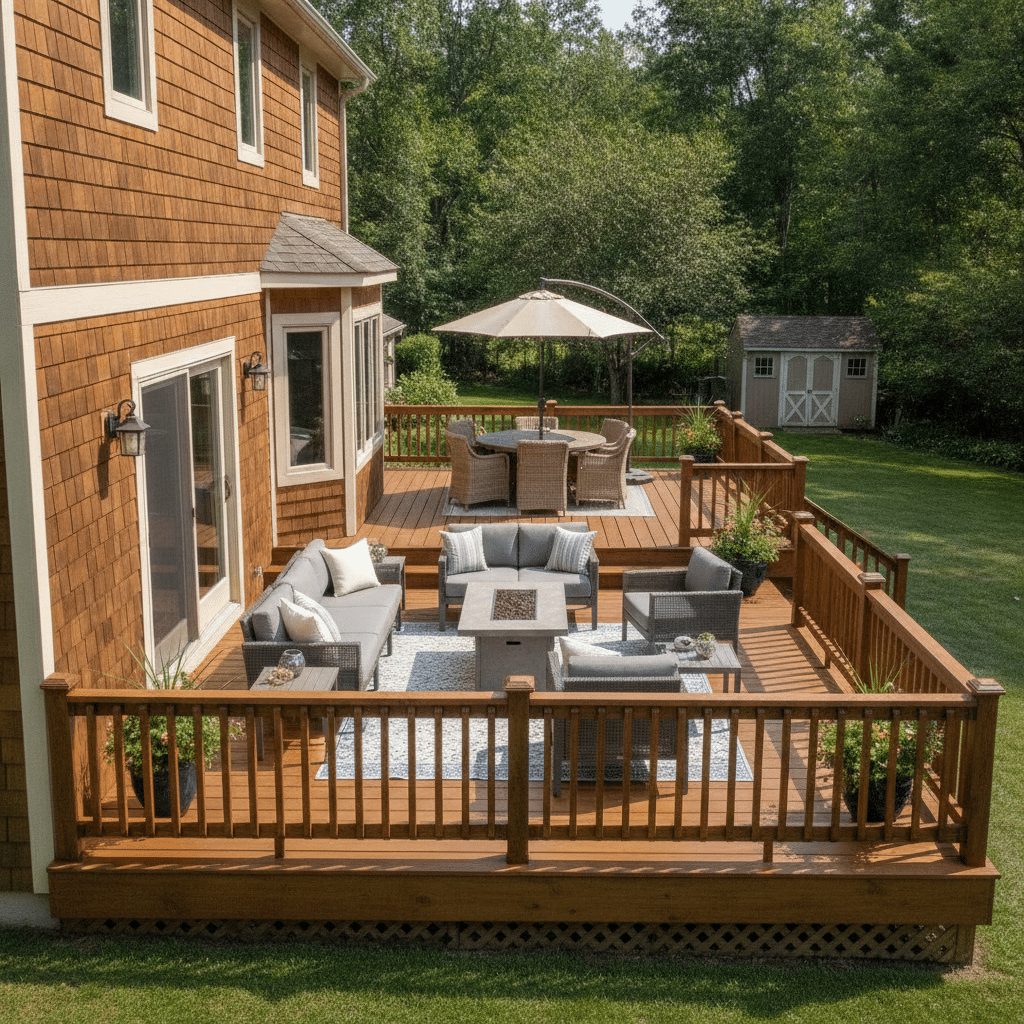
We bring color samples to your consultation. Seeing actual stain colors on wood in your lighting conditions helps you choose confidently.
When to Use Deck Stain Remover
Deck stain remover strips old finishes from wood. This creates a clean surface for new coating application.
Situations Requiring Stain Removal
Heavy buildup of old stain prevents new products from penetrating. Multiple layers of solid stain act like paint and must be removed.
Peeling stain looks terrible and won’t support new coating. The failing finish must come off first.
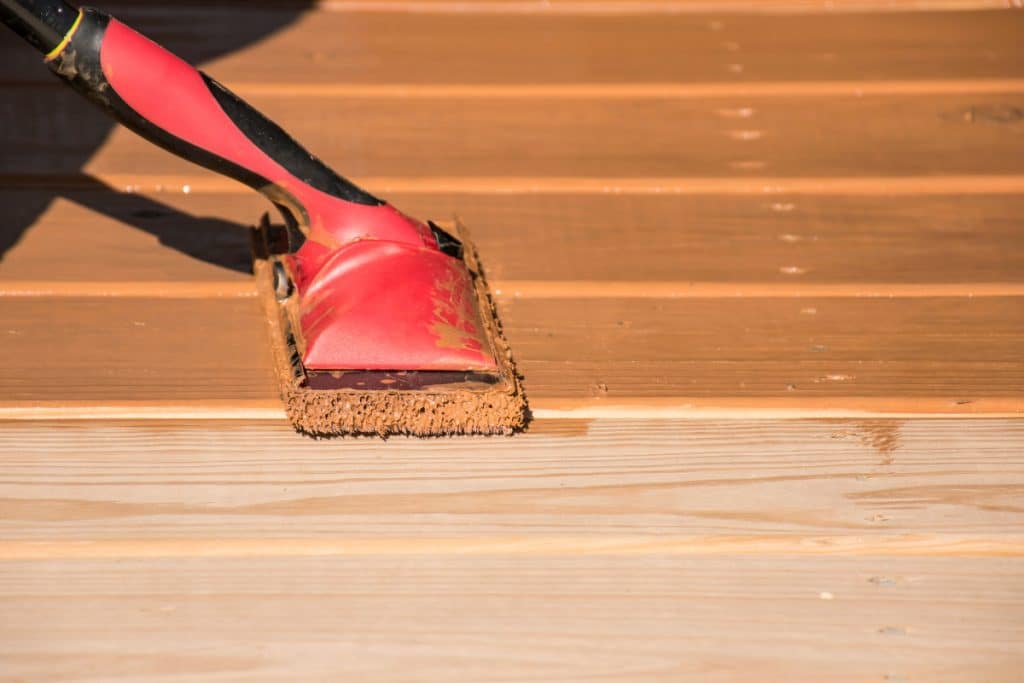
Changing from solid stain to semi-transparent requires removal. The old opaque coating would show through lighter stain.
Some stain remover products also clean and brighten wood. They remove gray weathered fibers and prepare the surface chemically for new finish.
How Stain Removers Work
Most deck stain remover products use chemical solvents to break down old finishes. You apply the product, wait the recommended time, then scrub and rinse.
Some removers work in 15 to 30 minutes. Others need several hours for heavy buildup. Always follow product instructions for safety and effectiveness.
After using stain remover, rinse thoroughly with a pressure washer. Chemical residue will prevent new stain from bonding properly.
Alternatives to Chemical Stripping
Sanding removes old stain mechanically. This works well for small areas or light stain buildup.
Pressure washing at high settings can remove some failing stain. Use caution because excessive pressure damages wood fibers and creates furring.
For severe cases, both chemical stripping and sanding may be necessary to reach clean wood.
Safety Note: Deck stain remover contains harsh chemicals. Wear protective gloves, eyewear, and clothing. Work in well-ventilated areas. Keep products away from plants, as they can damage vegetation.
Pool Deck Painting and Coating Considerations
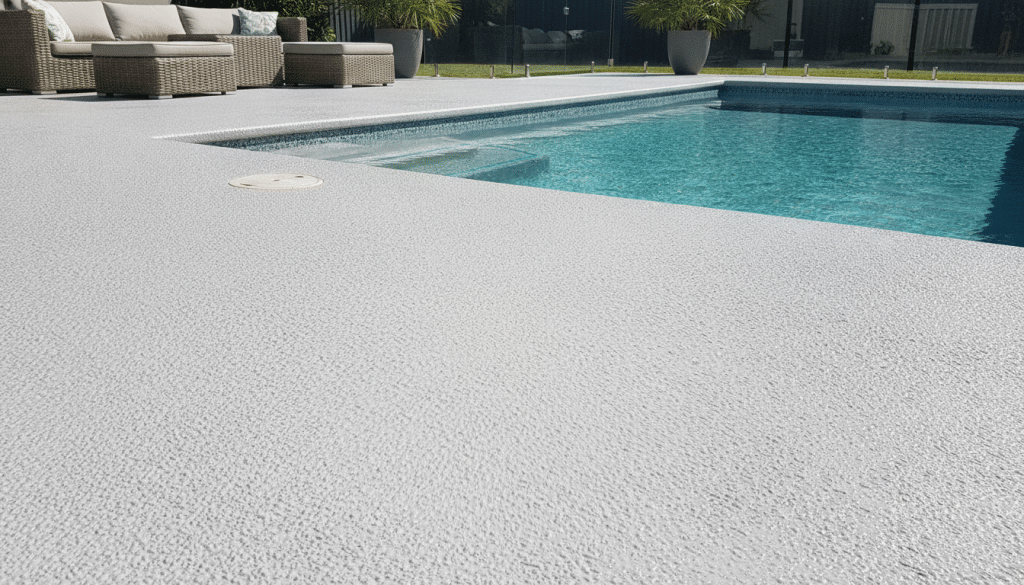
Pool deck painting differs from wood deck staining. Concrete pool decks need specialized coatings designed for their unique conditions.
Concrete vs Wood Surfaces
Concrete pool decks require products that bond to masonry. Standard deck stain won’t work on concrete.
Pool deck painting uses specialized acrylic or epoxy coatings. These create durable, slip-resistant surfaces that handle constant moisture exposure.
Safety Requirements
Slip resistance is critical around pools. Smooth painted surfaces become dangerously slick when wet.
Quality pool deck coatings include texture additives. These create grip even when water is present. Some products have built-in texture while others require adding sand or aggregate.
Chemical and Chlorine Resistance
Pool chemicals damage many standard coatings. Chlorine, pH adjusters, and other treatments splash onto deck surfaces constantly.
Pool deck painting requires products formulated to resist chemical damage. These specialized coatings maintain their finish despite harsh chemical exposure.
Temperature and Sunlight
Pool decks receive intense sun exposure. Dark colors absorb heat and become uncomfortable for bare feet.
Light-colored pool deck coatings stay cooler in summer sun. They also reflect UV rays better for longer-lasting protection.
We work with pool deck surfaces throughout Knoxville. Our experience includes both new installations and restoration of existing pool decks that need fresh coating.
Signs Your Deck Needs Staining, Sealing, Refinishing, or Repair
Knowing when your deck needs attention prevents minor issues from becoming expensive problems.
Visual Indicators
Gray or faded color signals UV damage and weathering. The protective finish has worn away, leaving wood exposed to the elements.
Water stains and dark blotches indicate moisture problems. These spots show where water has penetrated wood and caused discoloration.
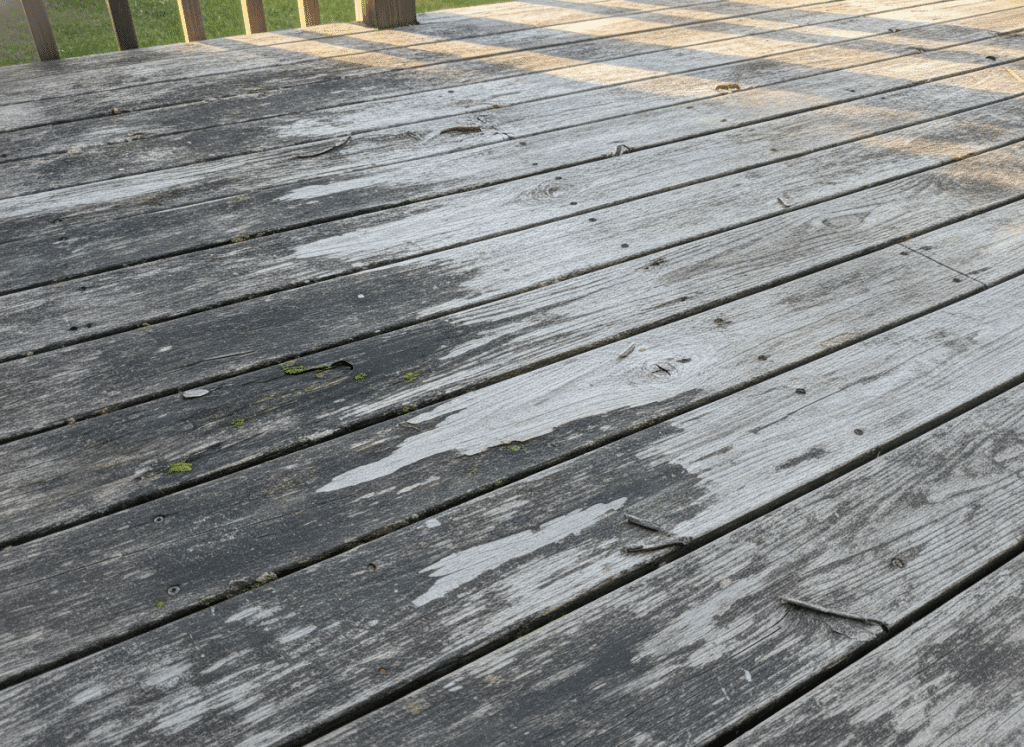
Peeling or flaking stain means the coating has failed. It no longer adheres to wood or provides protection.
Texture and Surface Changes
Rough, fuzzy wood texture develops as fibers break down from UV exposure. This creates splinters and an unpleasant walking surface.
Soft spots indicate rot. Press on suspicious areas to check for decay beneath the surface.
Cupping or warping boards show moisture damage. Wood has absorbed water unevenly and lost its shape.
Water Absorption Test
Splash water on your deck. Watch what happens in the first few minutes.
Water should bead up and sit on the surface if protection is working. If water soaks in quickly, the sealer has failed.
This simple test tells you when deck staining sealing is needed to restore moisture protection.
Structural Concerns
Loose railings or wobbly posts indicate connection problems. These require immediate attention for safety.
Protruding nails or screws that have backed out signal movement in the deck structure.
Bouncy or sagging deck boards suggest joist damage underneath. This needs professional evaluation before cosmetic work makes sense.
Cosmetic Issues (Staining Fixes)
- Faded or gray appearance
- Loss of water beading
- Minor surface roughness
- Even weathering patterns
- Aged but solid boards
Structural Issues (Repair Required)
- Soft or rotted wood
- Severely cracked boards
- Loose connections
- Unstable railings
- Sagging or bouncy sections
Not sure whether your deck needs cosmetic refinishing or structural repair? We offer free deck evaluations to assess condition honestly and recommend the right solution.
How the Deck Staining Process Works
Professional deck staining follows a systematic process. Each step builds on the previous one to ensure lasting results.
Initial Assessment and Planning
We start by evaluating your deck thoroughly. This includes structural inspection, measuring square footage, and noting problem areas.
We discuss your goals and preferences. This covers color choices, desired protection level, timeline, and budget considerations.
Based on deck condition, we recommend the appropriate preparation level and product selection. Some decks need minimal prep while others require extensive restoration work.
Clearing and Protecting
Remove all furniture, plants, grills, and other items from the deck. Cover nearby surfaces that could be affected by cleaning or staining.
We protect siding, windows, landscaping, and hardscapes adjacent to the deck. Drop cloth and plastic sheeting prevent overspray and drips.
Repair Work
Fix structural issues before surface prep begins. Replace rotted boards, tighten loose connections, and address safety concerns.
Set all protruding nails and screws. Fill large cracks or gaps if needed. Make sure the deck is solid and secure.
Deep Cleaning
Apply deck cleaner according to product instructions. These specialized cleaners remove dirt, mildew, algae, and surface contaminants.
Let the cleaner work for the recommended time. Usually 10 to 15 minutes allows chemicals to break down grime effectively.
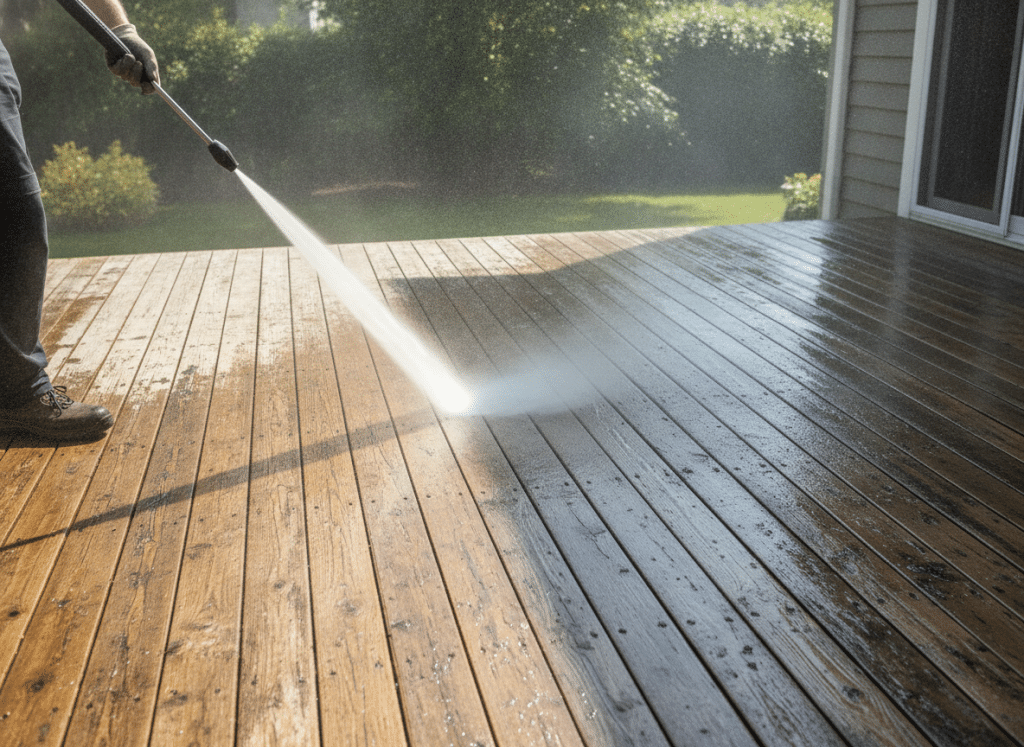
Use a pressure washer to rinse thoroughly. Maintain consistent pressure settings to clean without damaging wood. Keep the nozzle moving to avoid gouging.
Pressure Washer Tips
- Use a fan tip, not a pinpoint nozzle
- Keep pressure between 1200-1500 PSI for most wood
- Hold the wand 6-12 inches from the surface
- Move in the direction of the wood grain
- Overlap each pass slightly for even cleaning
- Avoid focusing on one spot too long
Stripping Old Stain (If Needed)
Apply deck stain remover to areas with heavy buildup or peeling finish. Follow product instructions for application and dwell time.
Scrub with a stiff brush to help lift old coating. Rinse thoroughly with the pressure washer until all chemical residue is gone.
Check that the surface is clean down to bare wood. Any remaining old finish will cause adhesion problems.
Sanding and Surface Prep
Sand rough areas and raised grain after pressure washing. This creates a smooth surface for stain application.
Use medium-grit sandpaper (80-100 grit) for general smoothing. Follow up with finer grit (120) for a polished surface.
Sand in the direction of the wood grain. Cross-grain sanding creates scratches that show through stain.
Clean up all sanding dust before staining. Sweep thoroughly, then wipe boards with a tack cloth.
Drying Time
Wood must dry completely before applying stain. Moisture in wood prevents absorption and causes milky appearance or adhesion failure.
Allow at least 48 hours of dry weather after cleaning. Three to four days is better, especially in humid conditions.
Test moisture content with a moisture meter if available. Wood should be below 15% moisture for best stain penetration.
Stain Application
Choose an ideal weather day. Temperature should be between 50-90 degrees. Avoid direct sun, high heat, or rain in the forecast.
Stir stain thoroughly before and during application. Don’t shake, as this creates bubbles. Mix pigments that settle at the bottom.
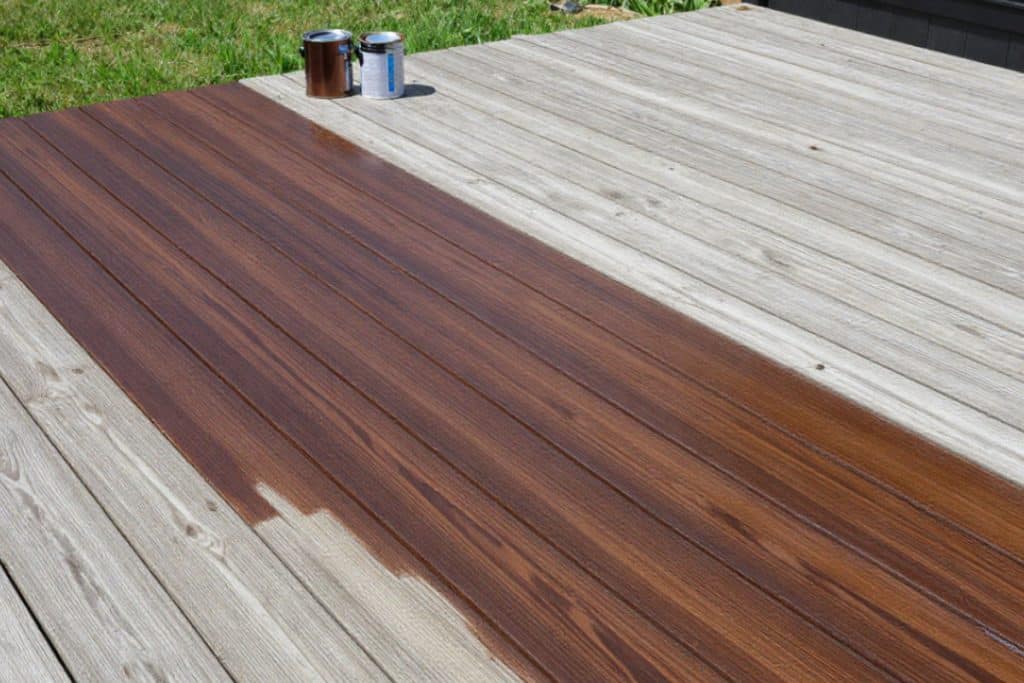
Apply stain with a brush, roller, or sprayer depending on surface size and product type. Brush works best for even penetration on horizontal deck boards.
Work in sections to maintain a wet edge. This prevents lap marks where wet stain meets dry.
Back-brush after applying stain. This works product into wood grain and removes excess that would puddle.
Pay attention to coverage rates on the product label. Don’t over-apply or under-apply. Following manufacturer instructions ensures proper protection.
Application Tips
- Start with railings and vertical surfaces first
- Move to horizontal deck boards last
- Work with the wood grain direction
- Keep a wet edge to avoid lap marks
- Don’t let excess stain puddle on the surface
- Check coverage regularly to ensure even coat
- Wipe drips immediately before they dry
Multiple Coats
Some projects need two coats of stain for proper coverage and protection. Severely weathered wood often absorbs the first coat quickly.
Wait the recommended time between coats. This varies by product but typically ranges from 2 to 24 hours.
Apply the second coat stain more lightly than the first. You’re adding protection, not saturating wood again.
Sealing (If Separate Product)
When using a two-step system, apply clear sealer after stain dries. This adds an extra layer of moisture protection.
Follow the same application principles as staining. Even coverage and proper penetration matter just as much.
Drying and Curing
Allow sufficient drying time before returning furniture or walking on the deck. Most products require 24-48 hours before light use.
Full cure takes longer – typically three to seven days. Avoid heavy furniture or water exposure during this period.
Check the forecast before starting your project. You need several dry days for proper curing.
Common Mistakes Homeowners Make with DIY Deck Staining
Deck staining looks straightforward but involves many details that affect final results. We see the same errors repeatedly when homeowners tackle projects themselves.
Skipping Surface Preparation
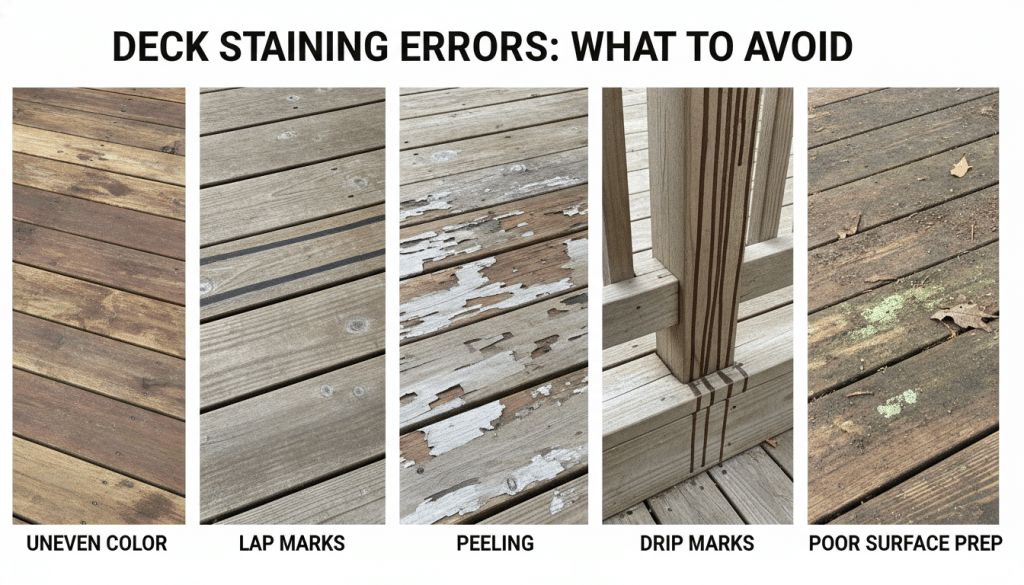
Rushing into stain application without proper prep causes most failures. Dirty wood, old finish residue, or rough surfaces prevent stain from bonding.
Adequate cleaning takes time. Pressure washing alone isn’t enough. Deck cleaner removes contaminants that water can’t.
Sanding smooths the surface and opens wood pores for better stain penetration. Skipping this step results in blotchy, uneven color.
Staining Wet or Damp Wood
Applying stain to wood that isn’t completely dry leads to adhesion problems. Moisture prevents stain from penetrating properly.
Wood looks dry on the surface hours after rain or cleaning. But moisture remains deep in the fibers for days.
This trapped moisture causes milky appearance, poor color, and early failure of the finish.
Wrong Weather Conditions
Staining in direct sun causes too-fast drying. The stain cures on the surface before penetrating wood. This creates a weak bond and uneven appearance.
High temperatures accelerate drying beyond the ideal rate. Low temperatures prevent proper curing.
Rain within 24 hours of application washes away stain before it sets. Always check the three-day forecast before starting.
Improper Stain Application
Over-application leaves sticky puddles that never fully cure. These spots collect dirt and look blotchy.
Under-application provides inadequate protection. Wood shows through inconsistently, and moisture resistance suffers.
Not maintaining a wet edge creates lap marks. These visible lines show where wet stain overlapped dried areas.
Using the Wrong Product
Not all deck stain products perform equally. Cheap stain requires more frequent reapplication and offers less protection.
Some products aren’t designed for horizontal surfaces that get foot traffic. These fail quickly under deck conditions.
Oil-based versus water-based stains have different application requirements and performance characteristics. Using the wrong type for your wood leads to poor results.
Ignoring Manufacturer Instructions
Product labels contain critical information about application temperature, coverage rates, dry times, and surface prep requirements.
Ignoring these guidelines compromises results. Each stain formula has specific needs for optimal performance.
Mixing products from different manufacturers can cause compatibility problems. Stick with one product line for the complete system.
Inadequate Drying Time
Replacing furniture too soon damages fresh finish. Walking on uncured stain leaves footprints and mars the surface.
Rain or dew on newly stained wood causes spotting and uneven appearance. Cure time matters for lasting protection.
Rushing through steps to save time usually costs more in the long run when the finish fails prematurely.
Avoid Costly Mistakes – Get Professional Results
DIY deck staining can save money initially, but mistakes cost more to fix than doing it right the first time. Our experienced crews know how to prepare surfaces properly, choose the right products, and apply them for lasting protection. We’ve refined our process over 25 years and more than 1,000 projects.
Why Hiring Deck Staining Contractors Can Protect Your Investment
Professional deck staining contractors bring expertise, equipment, and experience that ensure quality results and long-term protection.
Proper Assessment and Planning
We evaluate deck condition thoroughly before recommending solutions. This includes checking for structural issues that need addressing before cosmetic work.
Our experience with East Tennessee climate guides product selection. We know which stains and sealers hold up best in our humidity, sun exposure, and temperature fluctuations.
We help homeowners choose realistic timelines and understand what to expect through the process. Clear communication prevents surprises.
Professional-Grade Equipment
Commercial pressure washers clean more effectively than rental units. We control pressure settings precisely to clean without damaging wood.
Professional sprayers apply stain evenly and efficiently. This matters for consistent color and protection across large deck areas.
Quality brushes, rollers, and other tools make a difference in final appearance and stain penetration.
Thorough Surface Preparation
We take time to prepare surfaces correctly. This includes proper cleaning, stain removal when needed, sanding, and ensuring wood is completely dry.
Our crews understand how much prep each deck needs based on age, condition, and previous finishes. We don’t cut corners on steps that determine project success.
Product Knowledge and Application Skill
Years of working with various stain products teach us how they perform in real-world conditions. We know coverage rates, ideal weather windows, and application techniques for each formula.
Our crews apply stain evenly without lap marks, drips, or over-application. Consistent technique across the entire deck creates uniform appearance and protection.
Efficiency and Time Savings
Professional crews complete projects faster than DIY efforts. We work efficiently because we do this regularly, not once every few years.
You avoid the weekend after weekend commitment that deck staining requires. We handle the project start to finish while you focus on other priorities.
Quality Assurance
We stand behind our work with a five-year workmanship warranty. If problems arise from installation issues, we make them right.
Material warranties vary by manufacturer. We use quality products from reputable companies that support their formulations.
Our in-house crews maintain consistent quality standards. We don’t subcontract core work to unknown crews with varying skill levels.
Long-Term Value
Professional deck staining done correctly lasts longer than typical DIY results. This means fewer recoating cycles over your deck’s lifespan.
Proper protection prevents wood deterioration that requires board replacement. Investing in quality finishing now saves on repair costs later.
Well-maintained decks add home value. Professional appearance and durability appeal to future buyers if you sell.
DIY Deck Staining
- Lower initial cost
- Learn new skills
- Personal satisfaction
- Work on your schedule
- Risk of mistakes and do-overs
- Significant time investment
- Equipment rental or purchase needed
- No warranty on workmanship
Professional Deck Staining
- Expert assessment and guidance
- Professional equipment and products
- Efficient completion
- Workmanship warranty
- Consistent quality results
- No time commitment required
- Climate-specific product knowledge
- Structural issue identification


What Affects Deck Staining Cost
Several factors influence the total investment for professional deck staining. Understanding these helps you budget appropriately and compare quotes accurately.
Deck Size and Square Footage
Larger decks cost more to stain than smaller ones. Most contractors price by square foot for the horizontal deck surface.
Railings, stairs, and built-in features add to total cost. These require more detailed work than open deck boards.
Multi-level decks with complex layouts take longer and cost more than simple rectangular platforms.
Current Deck Condition
Decks in good condition need basic cleaning and staining. Severely weathered or damaged decks require extensive prep work.
Removing heavy old stain buildup adds cost. Sanding rough surfaces takes time. Repairs increase the total investment.
The worse the starting condition, the more work required to achieve quality results.
Product Selection
Premium stain and sealer products cost more than basic options. Higher-quality formulations typically last longer and perform better.
Solid color stains often cost more than transparent options. They require more product for proper coverage.
Two-step systems (separate stain and sealer) increase material costs compared to single-product solutions.
Labor and Expertise
Experienced deck staining contractors charge appropriately for their skill and knowledge. Quality workmanship costs more than inexperienced labor.
Our rates reflect 25 years of experience and proven processes. We employ in-house crews rather than subcontracting, ensuring consistent quality.
Extremely low quotes often indicate corners being cut on prep work, cheap products, or inexperienced applicators.
Geographic Location
Labor costs vary across different markets. Knoxville rates differ from larger metropolitan areas.
Travel distance affects pricing for properties outside main service areas. Projects in remote locations may include trip charges.
Timing and Seasonality
Peak season (spring and fall) sees higher demand. Scheduling during slower periods sometimes offers flexibility.
Weather delays can affect project timelines. We plan around East Tennessee’s climate patterns to minimize weather interruptions.
Additional Services
Deck repairs, board replacement, or structural work add to base staining costs. These are necessary for safety and proper finish adhesion.
Power washing driveways, siding, or other surfaces during the project may offer package pricing.
Get Accurate Pricing: We provide free estimates that detail all cost factors for your specific project. No hidden charges or surprise fees. Just honest, transparent pricing based on your deck’s needs. Request your free estimate or call us at (865) 316-6933.
Typical Cost Ranges
Professional deck staining in Knoxville typically ranges from $2 to $5 per square foot. This includes cleaning, prep, and stain application.
Basic projects on newer decks in good condition fall toward the lower end. Extensive restoration on older weathered decks costs more.
Very large decks may see some economy of scale. Small decks or those with complex features may cost more per square foot.
Comparing Quotes
Don’t choose contractors based solely on the lowest price. Compare what’s included in each estimate.
Ask about surface preparation methods, product quality, warranty coverage, and timeline. These factors affect value more than just the bottom line number.
Verify that contractors are properly licensed and insured. Check references and review past project photos.
Deck Maintenance Tips After Staining
Proper maintenance extends the life of your deck staining investment. Simple regular care prevents problems and keeps your deck looking great.
Regular Cleaning
Sweep your deck weekly to remove leaves, dirt, and debris. Trapped organic matter holds moisture against wood and promotes mold growth.
Wash the deck surface annually with mild deck cleaner. This removes built-up grime before it degrades the finish.
Clean up spills promptly. Food, drinks, and other substances can stain or damage the finish if left sitting.
Furniture and Planter Care
Use furniture pads under chair and table legs. These prevent scratches and finish wear in high-traffic spots.
Move outdoor furniture periodically. This prevents uneven fading and allows all deck areas to weather uniformly.
Place saucers under planters to catch water drainage. Direct water contact can damage stain and wood over time.
Water Management
Keep gutters and downspouts directing water away from the deck. Constant moisture exposure accelerates finish breakdown.
Trim vegetation that touches deck surfaces. Plants trap moisture and prevent proper air circulation.
Check that deck boards drain properly after rain. Standing water indicates slope problems or clogged gaps between boards.
Seasonal Inspections
Walk your deck each spring and fall. Look for new damage, loose boards, or finish wear.
Test the water beading effect annually. This tells you when protection is weakening and refinishing is approaching.
Address small issues immediately before they become major problems. Tighten loose screws, fix minor cracks, and clean trouble spots.
Refinishing Timing
Plan to refresh your deck staining every two to four years. High-traffic areas may need attention sooner.
Don’t wait until wood shows severe weathering. Refinishing becomes more difficult and expensive once wood degrades significantly.
Light maintenance coats between full refinishing can extend protection. Clean the deck thoroughly and apply fresh sealer when water stops beading.
Winter Considerations
Remove snow promptly to prevent prolonged moisture exposure. Use plastic shovels instead of metal to avoid scratching the finish.
Avoid ice melt products that can damage wood and stain. Sand provides traction without chemical harm.
Keep the deck clear of debris through winter. Wet leaves under snow create perfect conditions for mold and rot.
Weekly Tasks
Simple routine care prevents bigger problems:
- Sweep deck surface
- Remove debris from between boards
- Wipe up spills immediately
- Check for new damage
Monthly Tasks
Regular maintenance keeps your deck in top shape:
- Wash high-traffic areas
- Move furniture to prevent uneven fading
- Trim nearby vegetation
- Clear debris from under deck
Seasonal Tasks
Twice-yearly attention catches issues early:
- Deep clean entire deck
- Test water beading
- Inspect for structural issues
- Tighten loose connections
Annual Tasks
Yearly care maintains long-term protection:
- Professional inspection (optional)
- Apply maintenance sealer coat if needed
- Address any repairs
- Plan for full refinishing cycle
Following these simple steps helps your stained deck last longer and look better between professional refinishing cycles.
Serving Knoxville and East Tennessee Communities
Knoxville Deck Builders serves homeowners throughout Knoxville and surrounding East Tennessee areas. Our local presence means we understand regional climate challenges and respond quickly to your needs.
Primary Service Areas
We regularly complete deck staining projects throughout these communities:
Knoxville Metro
- Downtown Knoxville
- West Knoxville
- North Knoxville
- South Knoxville
- East Knoxville
West Communities
- Farragut
- Lenoir City
- Oak Ridge
- Kingston
- Loudon
South & East Areas
- Maryville
- Alcoa
- Sevierville
- Seymour
- Kodak
Additional Coverage
We also serve Powell, Clinton, Andersonville, and other nearby East Tennessee communities. Contact us to confirm service availability in your area.
Local Climate Expertise
Twenty-five years working in East Tennessee taught us how our climate affects deck finishes. We understand humidity patterns, seasonal weather, and sun exposure unique to our region.
This local knowledge guides our product recommendations and application timing. We know which stains hold up best and when weather windows allow ideal working conditions.
Community Commitment
As a local company, we’re invested in our community. More than 1,000 happy customers across Knoxville and surrounding areas trust us with their deck projects.
We maintain our reputation through quality work, honest communication, and standing behind our results. Your neighbors are our customers, and word-of-mouth remains our best advertising.
Visit our Knoxville location at 1219 Maryville Pike, Knoxville, TN 37920
Frequently Asked Questions About Deck Staining
How much does professional deck staining cost in Knoxville?
Professional deck staining typically costs between $2 and $5 per square foot in the Knoxville area. Final pricing depends on deck size, current condition, product selection, and required preparation work.
Decks in good condition with minimal prep needs fall toward the lower end. Older weathered decks requiring extensive cleaning, stain removal, or repairs cost more.
We provide free estimates that detail all cost factors specific to your deck. Contact us for accurate pricing based on your project.
Should I stain or paint my deck?
Deck staining is generally better for wood decks in East Tennessee. Stain penetrates wood fibers, allows natural movement, and wears more gracefully than paint.
Paint creates a surface film that can crack and peel with wood movement from our temperature and humidity changes. Deck painting makes more sense for concrete pool decks or covered porch floors.
For wood decks exposed to weather, stain provides better long-term protection and easier maintenance. We can help you determine the best option for your specific situation.
What deck staining color should I choose?
The best deck staining color depends on your home’s exterior, personal preferences, and deck condition. Natural cedar and redwood tones remain most popular in Knoxville.
Transparent stains showcase beautiful wood grain on newer decks. Semi-transparent options add color while revealing grain character. Solid color stains hide imperfections on older weathered decks.
We bring color samples to your consultation so you can see actual stain colors on wood in your lighting. This helps you choose confidently. Dark colors absorb more heat in summer, while lighter tones stay cooler underfoot.
How often should I restain my deck?
Most decks need restaining every two to four years in East Tennessee’s climate. The exact timing depends on sun exposure, foot traffic, product quality, and weather conditions.
Test your deck’s protection annually by splashing water on the surface. If water beads up, the sealer is working. If water soaks in immediately, refinishing is needed soon.
Don’t wait until wood shows severe graying or damage. Restaining before protection completely fails is easier and less expensive than major restoration work.
When should I use deck stain remover?
Use deck stain remover when old finish is peeling, heavily built up, or when changing from solid to lighter stain colors. Chemical strippers break down old coatings and prepare wood for new applications.
Stain remover is necessary if you’re switching stain types or if multiple layers of old stain prevent new products from penetrating. Some removers also brighten weathered wood.
For decks with minor old stain residue, thorough cleaning and light sanding may suffice. We assess your deck’s condition and recommend the appropriate prep level during free consultations.
How do I get started with my deck staining project?
Start by contacting Knoxville Deck Builders for a free consultation. We’ll visit your property, evaluate your deck’s condition, discuss your goals, and provide honest recommendations.
We explain your options, show color samples, answer questions, and provide a detailed written estimate. There’s no pressure or obligation.
Call us at (865) 316-6933 or request an estimate online. We’ll schedule a convenient time to assess your deck and discuss how we can help protect your outdoor investment.
Ready to Protect and Restore Your Deck?
Your deck deserves proper protection from East Tennessee weather. Quality deck staining extends wood life, enhances appearance, and creates a safer outdoor space for your family.
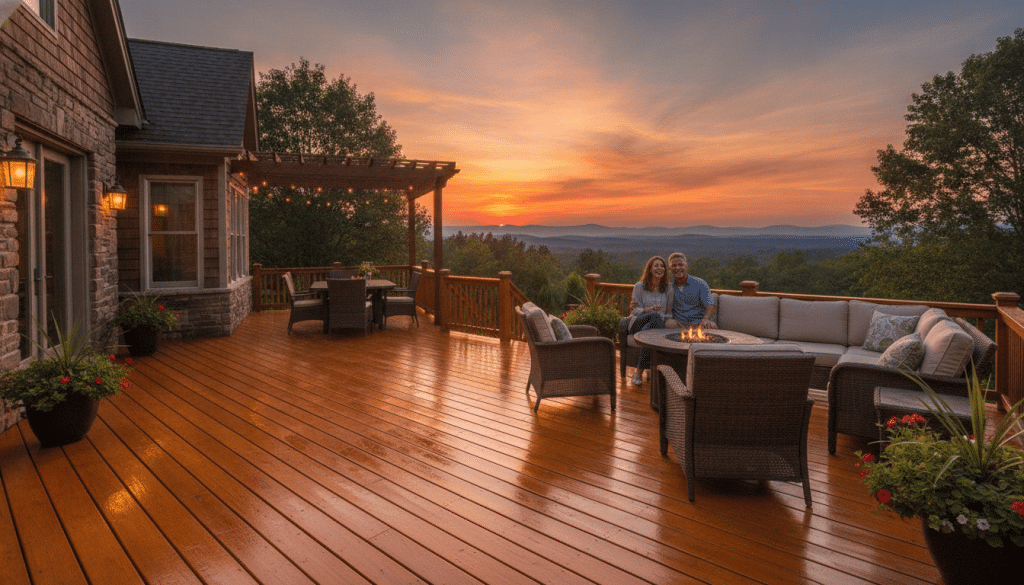
We’ve helped more than 1,000 Knoxville area homeowners protect their decks over 25 years in business. Our experience with regional climate, quality products, and proven processes deliver results that last.
Whether your deck needs complete restoration or regular maintenance staining, we provide honest assessments and expert craftsmanship. We’re here to guide you through options and answer your questions.
Get Your Free Deck Staining Consultation
Let’s discuss your deck’s needs and how we can help. Free estimates, honest guidance, and no-pressure service from Knoxville’s trusted deck experts.
Why Choose Knoxville Deck Builders
- 25 years serving East Tennessee homeowners
- More than 1,000 satisfied customers
- In-house crews – no subcontracted work
- Free consultations and estimates
- Five-year workmanship warranty
- Local climate expertise
- Quality products and proven processes
- Honest, transparent communication
Contact Information
Knoxville Deck Builders
Operated by Anchored Construction and Restoration LLC
Phone: (865) 316-6933
Email: info@knoxvilledeckbuilders.com
Address: 1219 Maryville Pike, Knoxville, TN 37920
Service Area: Knoxville, Farragut, Maryville, Oak Ridge, Alcoa, Powell, Lenoir City, Seymour, Clinton, Sevierville, and surrounding East Tennessee communities
Website: knoxvilledeckbuilders.com
